
Picture this: you’re sitting at a kitchen table in Stafford County, and two loan officers have just slid their proposals across to you. One is offering a fixed rate mortgage. The other is pitching an adjustable-rate mortgage with a lower starting payment. Both sound reasonable. Neither has fully explained what happens five years from now.
This is one of the most common — and most consequential — decisions Fredericksburg area homebuyers face. In a market where median home prices in Spotsylvania and Stafford counties regularly exceed $400,000, the difference between a fixed and adjustable rate over the life of a loan can translate into tens of thousands of dollars in total interest paid. Getting this decision wrong is expensive. Getting it right starts with understanding how each product actually works.
This guide is not a sales pitch. It is a structured, educational breakdown of the Fredericksburg fixed rate mortgage landscape: what it costs, how the math works, what drives your rate, and how your choice of lender affects the number you ultimately receive. It covers every major loan program available in the Fredericksburg, Stafford, Spotsylvania, and Prince William County markets — conventional, FHA, VA, USDA, jumbo, and non-QM. Whether you are a first-time buyer, a veteran stationed at Quantico, or a real estate investor in Prince William County, the information here applies directly to your situation.
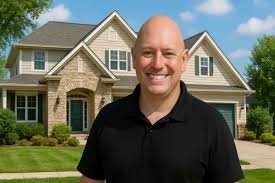
Article authored by Duane Buziak, Mortgage Maestro, NMLS#1110647, independent mortgage broker and VA Broker of the Year 2024-2025, licensed in Virginia, Florida, Tennessee, and Georgia.
How a Fixed Rate Mortgage Actually Works
A fixed rate mortgage is exactly what the name implies: the interest rate is locked in at closing and does not change for the entire life of the loan. Whether your term is 10, 15, 20, or 30 years, your principal and interest (P&I) payment remains identical from your first payment to your last. Federal Reserve rate decisions, bond market swings, and economic cycles have zero effect on your payment once the loan closes.
The mechanism behind this stability is amortization. Each monthly payment covers both interest and principal, but the proportion shifts dramatically over time. In the early years, the majority of your payment goes toward interest. As the loan matures, more of each payment chips away at principal. This is not a flaw — it is simply how compound interest math works when applied to a declining balance.
The table below illustrates this shift using a $400,000 loan at a 7.00% fixed rate over 30 years. These figures are illustrative only and are not a rate quote. Verify using the CFPB mortgage calculator at consumerfinance.gov/owning-a-home/mortgage-calculator/.
Illustrative Amortization Snapshot — $400,000 Loan at 7.00% Fixed / 30-Year Term
Year 1: Monthly P&I ≈ $2,661 | Interest portion ≈ $2,317 | Principal portion ≈ $344 | Remaining balance ≈ $395,900
Year 15: Monthly P&I ≈ $2,661 | Interest portion ≈ $1,640 | Principal portion ≈ $1,021 | Remaining balance ≈ $279,500
Year 30 (final year): Monthly P&I ≈ $2,661 | Interest portion ≈ $22 | Principal portion ≈ $2,639 | Remaining balance ≈ $0
One important clarification: while your P&I payment is fixed, your total monthly mortgage payment is not necessarily static. Property taxes, homeowners insurance premiums, and HOA fees are collected through your escrow account and can increase over time. A fixed rate mortgage locks your loan cost — it does not freeze local tax assessments or insurance markets. Stafford County and Spotsylvania County property tax rates are set independently and have historically adjusted over time, so budget for modest annual increases in your total housing payment even on a fixed rate loan.
Fixed Rate vs. ARM: A Side-by-Side Comparison for Stafford and Spotsylvania Buyers
The core tradeoff between a fixed rate mortgage and an adjustable-rate mortgage (ARM) comes down to certainty versus initial cost. Fixed rates trade a slightly higher starting rate for complete payment predictability. ARMs offer a lower initial rate that adjusts after a set period — typically 5 or 7 years — based on a market index.
Loan Type Comparison Table
30-Year Fixed: Rate stability = permanent | Risk profile = low | Best use case = long-term ownership (7+ years) | Ideal buyer = civilian homeowner, family putting down roots
15-Year Fixed: Rate stability = permanent | Risk profile = low | Best use case = faster equity build, lower total interest | Ideal buyer = buyer with strong cash flow, refinancing to shorten term
5/1 ARM: Rate stability = fixed 5 years, then annual adjustments | Risk profile = moderate-high | Best use case = short-term ownership under 5 years | Ideal buyer = military family likely to PCS before adjustment kicks in
7/1 ARM: Rate stability = fixed 7 years, then annual adjustments | Risk profile = moderate | Best use case = medium-term ownership with relocation likelihood | Ideal buyer = buyer confident in a move or refinance within 7 years
The payment comparison below uses a $425,000 loan amount, which reflects the active price tier in Stafford and Spotsylvania County markets. All rates shown are illustrative only and are not a current rate quote. Actual rates depend on credit profile, loan type, and market conditions at time of application.
Illustrative Payment Comparison — $425,000 Loan Amount
30-Year Fixed at 7.00%: Monthly P&I ≈ $2,828 | Total interest over life of loan ≈ $593,000 | Payment certainty = complete
15-Year Fixed at 6.50%: Monthly P&I ≈ $3,703 | Total interest over life of loan ≈ $241,000 | Payment certainty = complete
5/1 ARM at 6.25% (initial): Monthly P&I ≈ $2,617 (years 1-5) | Total interest = variable after year 5 | Payment certainty = none after adjustment
7/1 ARM at 6.50% (initial): Monthly P&I ≈ $2,688 (years 1-7) | Total interest = variable after year 7 | Payment certainty = none after adjustment
For the Fredericksburg military community, particularly active duty personnel stationed at Quantico, an ARM can be a rational choice: if a PCS move is likely within five years, the lower initial rate captures real savings without exposure to the adjustment period. For a civilian family buying in Spotsylvania with a 20-year horizon, the fixed rate math typically wins decisively. The question is not which product is better in the abstract — it is which product fits your specific timeline.
What Drives Your Fixed Rate in the Fredericksburg Market
Two borrowers buying identical homes on the same street in Stafford County can receive meaningfully different fixed rates. Understanding why requires knowing the five primary pricing factors lenders apply to every loan.
1. Credit Score Tier: Your FICO score is the single largest pricing variable on a conventional loan. Fannie Mae and Freddie Mac publish Loan Level Price Adjustments (LLPAs) that add cost to loans based on credit score bands and LTV. These adjustments are publicly available at fanniemae.com. A borrower at 760+ FICO receives the most favorable pricing tier. Each band lower typically increases the effective rate or requires additional points at closing.
2. Loan-to-Value Ratio (LTV): The more equity or down payment you bring, the lower your pricing risk to the lender. Higher LTV (smaller down payment) generally means higher pricing adjustments, particularly on conventional loans.
3. Loan Type: VA and USDA loans carry government backing that reduces lender risk, which often results in competitive rates even for borrowers with lower credit scores. FHA loans have their own pricing structure including mortgage insurance premiums. Conventional loans follow Fannie/Freddie LLPA pricing directly.
4. Loan Term: A 15-year fixed rate is typically priced lower than a 30-year fixed because the shorter repayment window reduces the lender’s long-term interest rate risk.
5. Discount Points Paid at Closing: Borrowers can pay upfront points to permanently reduce their interest rate. One discount point equals 1% of the loan amount. Whether buying points makes financial sense depends entirely on how long you plan to stay in the home. Understanding the tradeoff between mortgage points and a lower interest rate is essential before you commit to any closing cost structure.
Credit Score and LTV Pricing Tiers (Conventional Loans — Qualitative Reference)
760+ FICO / LTV under 75%: Most favorable pricing tier | Minimal LLPA adjustments
720-759 FICO / LTV 75-80%: Strong pricing | Modest adjustments
680-719 FICO / LTV 80-85%: Moderate adjustments | PMI likely required
640-679 FICO / LTV 85-90%: Noticeable pricing impact | PMI required
620-639 FICO / LTV 90-95%: Significant adjustments | Higher effective rate
580-619 FICO: Conventional approval difficult | FHA typically more favorable
500-579 FICO: Conventional not available | FHA 10% down or VA loan required
Source for LLPA structure: Fannie Mae LLPA Matrix
Discount Points Breakeven Math — Fully Worked Illustrative Example
Scenario: $400,000 loan. Borrower is offered the choice between a base rate with no points, or paying 1 discount point to reduce the rate.
1 discount point = 1% of $400,000 = $4,000 upfront cost
If the rate reduction from paying that point saves $50 per month on the P&I payment:
Breakeven = $4,000 ÷ $50/month = 80 months (6.7 years)
If the rate reduction saves $80 per month:
Breakeven = $4,000 ÷ $80/month = 50 months (4.2 years)
Interpretation: if you plan to stay in the home longer than the breakeven point, buying the discount point produces net savings. If you plan to sell or refinance before that point, the upfront cost is not recovered. For a buyer purchasing a long-term home in Spotsylvania or Prince William County, this math often favors buying points. For a military buyer who may PCS in three years, it typically does not. Before closing, review your Fredericksburg closing cost estimates carefully so the full picture of upfront expenses is clear.
Broker vs. Bank: Why Your Lender Choice Changes Your Fixed Rate
The rate you receive on a Fredericksburg fixed rate mortgage is not solely a function of your credit profile. It is also a direct function of who you work with and how many lenders they can access on your behalf.
Here is the structural reality of the mortgage market: retail banks and direct lenders offer loans from one institution’s rate sheet. An independent mortgage broker accesses wholesale rates from hundreds of lenders simultaneously and submits your loan to whichever institution offers the most competitive terms for your specific profile. These are not the same thing, and the price difference can be meaningful. Buyers who want to understand this distinction in depth should review the case for choosing a Fairway Mortgage Fredericksburg alternative before committing to a single lender.
Lender Type Comparison — Fredericksburg Market
Fredericksburg Mortgages (Independent Broker / Duane Buziak NMLS#1110647): Lender type = wholesale broker | Rate options = 500+ wholesale lenders | VA minimum FICO = 500 | Non-QM available = yes (bank statement, DSCR) | Soft credit pull pre-qualification = yes (NoTouch Credit Solutions)
Atlantic Coast Mortgage (Mac Church), Movement Mortgage (Nick Bohn / Dave Walczak), Fairway Independent (Jordan Taylor / Scott Hine), UHM (John Reid), New American Funding (Dena Cooke), C&F Mortgage, FXBG Mortgage, Guild Mortgage, Alcova Mortgage, Prosperity Mortgage, PrimeLending, Atlantic Bay: Lender type = retail mortgage company or correspondent lender | Rate options = limited to that company’s approved investor set | VA minimum FICO = typically 580-620 (varies by company) | Non-QM = limited or unavailable | Soft credit pull = varies
Rocket Mortgage, Veterans United, Freedom Mortgage, PennyMac: Lender type = direct lender | Rate options = their own product line only | VA minimum FICO = varies | Non-QM = limited | Soft credit pull = varies
Truist (Vickie Pittman), Ameris Bank (Philip King): Lender type = retail bank | Rate options = single institution | VA minimum FICO = typically 620+ | Non-QM = generally unavailable | Soft credit pull = varies
This comparison is not intended to suggest that any of these lenders provide poor service. Many are experienced professionals who serve Fredericksburg buyers well. The structural difference is straightforward: an independent broker can present your loan to multiple wholesale lenders and let the market compete for your business. A retail lender or bank presents you with their rate. Both structures have legitimate use cases — but buyers who understand this distinction make more informed decisions.
NoTouch Credit Solutions: Early rate exploration should not cost you credit score points. Fredericksburg Mortgages offers soft credit pull pre-qualification, meaning you can get a real picture of your loan options and rate range without triggering a hard inquiry on your credit report. This matters particularly when you are comparing offers across multiple lenders — multiple hard pulls within a short window can affect your score. If your credit profile needs attention before applying, credit restoration services can help you reach a stronger pricing tier before you lock a rate. A soft pull produces no credit score impact and gives you the information you need to make an informed comparison before committing to a full application.
Fixed Rate Loan Programs Available to Fredericksburg Area Buyers
Not all fixed rate mortgages are the same product. The program you qualify for and choose has a significant effect on your rate, down payment requirement, and monthly cost structure. The table below covers the primary fixed rate programs available in the Fredericksburg, Stafford, Spotsylvania, and Prince William County markets.
Fixed Rate Loan Program Reference Table
Conventional 30-Year Fixed: Min credit score = 620 (conventional guideline) | Min down payment = 3-5% | PMI required = yes, if LTV above 80% | Best for = buyers with strong credit, established income | Note: subject to FHFA conforming loan limit (verify current 2026 limit at fhfa.gov)
Conventional 15-Year Fixed: Min credit score = 620 | Min down payment = 3-5% | PMI required = yes, if LTV above 80% | Best for = buyers prioritizing faster equity and lower total interest | Note: higher monthly payment than 30-year
FHA 30-Year Fixed: Min credit score = 580 for 3.5% down; 500 for 10% down | Min down payment = 3.5% (580+ FICO) | PMI equivalent = MIP (mortgage insurance premium, for life of loan in most cases) | Best for = buyers with lower credit scores or limited down payment | Source: HUD.gov
VA 30-Year Fixed: Min credit score = no VA minimum; Fredericksburg Mortgages approves to 500 FICO | Min down payment = 0% | PMI required = none | Best for = eligible veterans, active duty, surviving spouses | Source: VA.gov
USDA 30-Year Fixed: Min credit score = typically 640 | Min down payment = 0% | PMI equivalent = annual guarantee fee | Best for = buyers in eligible rural areas of Stafford, Spotsylvania, or areas near Culpeper | Eligibility: verify at eligibility.sc.egov.usda.gov
Jumbo Fixed Rate: Min credit score = typically 700+ | Min down payment = 10-20% | PMI required = varies | Best for = loan amounts above the FHFA conforming limit | Note: verify current 2026 conforming limit at fhfa.gov before determining if jumbo applies
Non-QM Fixed (Bank Statement / DSCR): Min credit score = varies by product | Min down payment = typically 10-20% | PMI = generally not applicable | Best for = self-employed borrowers (bank statement), real estate investors in Prince William County and Stafford (DSCR) who cannot document income through traditional W-2/tax return methods
The VA fixed rate loan deserves specific attention for the Quantico and broader military community in this region. The VA loan program requires no down payment, charges no private mortgage insurance, and is available down to 500 FICO through Fredericksburg Mortgages — a threshold that is not standard at most retail lenders. For eligible veterans and active duty service members, the VA fixed rate loan is frequently the most cost-effective financing option in the market. Full eligibility guidelines are available at VA.gov.
For buyers with credit challenges, the FHA fixed rate program provides an accessible entry point. For self-employed borrowers and investors who cannot document income through traditional means, non-QM fixed rate products fill a gap that retail banks and most retail mortgage companies simply do not offer. Buyers purchasing in rural portions of the region should also explore the USDA rural housing loan Virginia program, which offers zero-down fixed rate financing in eligible areas.
Putting It All Together: Your Fixed Rate Decision Framework
The right fixed rate strategy depends on three questions you need to answer honestly before you choose a product or a lender.
Question 1 — How long do you plan to stay? If you expect to own the home for under five years, an ARM may produce lower total cost. If your horizon is seven years or longer, fixed rate math typically wins because you eliminate the risk of rate adjustment and the certainty of your payment supports long-term budgeting.
Question 2 — Is your income stable and predictable? Fixed rate mortgages are built for predictability. If your income is consistent, a fixed rate locks in a known housing cost. If your income is variable (self-employed, commission-based), pairing a fixed rate with a non-QM product like a bank statement loan may be the right combination.
Question 3 — Do you prioritize budget certainty over potential short-term savings? An ARM’s lower initial payment is real money, but it comes with the risk of future increases. If payment certainty matters more than capturing a slightly lower initial rate, the fixed rate is the appropriate tool.
On Refinancing: A fixed rate mortgage today is not a permanent commitment. If rates decline meaningfully in future years, a rate-and-term refinance allows you to capture a lower rate on a new fixed loan. The decision to refinance should use the same breakeven math applied to discount points:
Refinance Breakeven = Total closing costs ÷ Monthly payment reduction = Months to recoup
Illustrative Example: $6,000 in closing costs ÷ $150/month payment reduction = 40 months (3.3 years) to break even. If you plan to stay in the home longer than 40 months after refinancing, the refinance produces net savings. If you plan to sell within three years, the closing costs likely exceed the savings captured.
Cash-out refinancing is a separate tool that allows homeowners to access equity built over time — useful for home improvements, debt consolidation, or investment purposes — while maintaining a fixed rate on the new loan balance. Homeowners considering this path should review how a Fredericksburg cash out refinance works before deciding whether it fits their financial goals.
Frequently Asked Questions: Fixed Rate Mortgages in Fredericksburg
Q: What credit score do I need for a fixed rate mortgage in Fredericksburg?
A: It depends on the loan type. Conventional fixed rate loans generally require a minimum 620 FICO score. FHA fixed rate loans are available down to 580 FICO for 3.5% down, or 500 FICO with 10% down (source: HUD.gov). VA fixed rate loans have no minimum score set by the VA — Fredericksburg Mortgages approves VA loans down to 500 FICO. USDA loans typically require 640+. Your actual rate will vary based on your credit tier and the Fannie Mae LLPA pricing structure.
Q: Can I get a fixed rate VA loan with a 500 credit score?
A: Yes, through Fredericksburg Mortgages. The VA itself does not set a minimum credit score requirement — individual lenders set their own overlays. Most retail lenders require 580-620 minimum. Fredericksburg Mortgages approves VA fixed rate loans down to 500 FICO, which is a meaningful difference for veterans rebuilding credit. Confirm VA loan eligibility at VA.gov.
Q: How do I compare fixed rate offers without hurting my credit?
A: Use a lender that offers soft credit pull pre-qualification before the formal application. Fredericksburg Mortgages provides NoTouch Credit Solutions — a no-credit-hit pre-qualification that gives you a real rate range and program options without triggering a hard inquiry. When you are ready to formally apply and rate shop, the CFPB notes that multiple mortgage inquiries within a short window (typically 14-45 days depending on the scoring model) are often treated as a single inquiry for scoring purposes.
Q: What is the difference between APR and interest rate on a fixed mortgage?
A: The interest rate is the cost of borrowing the principal, expressed as a percentage. The APR (Annual Percentage Rate) includes the interest rate plus lender fees, points, and certain closing costs, expressed as an annualized figure. APR gives a more complete picture of the total cost of the loan. The CFPB provides a clear explanation at consumerfinance.gov. When comparing fixed rate offers, compare APRs — not just interest rates — to make a true apples-to-apples comparison.
Q: Is a 15-year or 30-year fixed better for Fredericksburg buyers?
A: The 15-year fixed carries a lower interest rate and dramatically reduces total interest paid over the life of the loan — but the monthly payment is significantly higher. The 30-year fixed offers a lower monthly payment and greater cash flow flexibility, but you pay more in total interest. The right choice depends on your monthly budget, how long you plan to stay, and whether the cash flow difference serves a productive purpose (investing the difference, for example). Many buyers in Stafford and Spotsylvania County choose the 30-year fixed for the payment flexibility, then make extra principal payments when cash flow allows.
The Bottom Line on Your Fredericksburg Fixed Rate Mortgage
A fixed rate mortgage is the most predictable home financing tool available in the market today. Your principal and interest payment is locked from day one, regardless of what happens to interest rates, the economy, or the Federal Reserve over the next 30 years. That certainty has real value — particularly for long-term homeowners in Fredericksburg, Stafford, Spotsylvania, and Prince William County.
But the rate you receive is not fixed by fate. It is determined by your credit profile, your loan type, your LTV, the term you choose, and critically, how many lenders are competing for your loan. A borrower who works with an independent broker accessing 500+ wholesale lenders is in a structurally different position than a borrower who walks into a single retail bank or direct lender. Both paths lead to a mortgage. They do not necessarily lead to the same rate.
Every loan program covered in this article — conventional, FHA, VA, USDA, jumbo, bank statement, and DSCR — is available through an independent broker serving the Fredericksburg market. VA loans to 500 FICO. Non-QM products for self-employed borrowers and real estate investors. And the ability to explore your options without a credit score impact through NoTouch Credit Solutions.
The next step in your education is a conversation. get started with a no-credit-hit pre-qualification today. Call or text Duane Buziak at (540) 870-5594 or visit FredericksburgMortgages.com. No hard pull. No obligation. Just clear information about what you qualify for and what it will actually cost.