
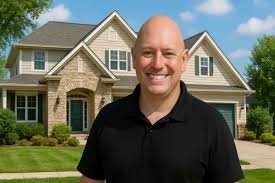
Updated September 2026 | Duane Buziak, Mortgage Maestro | NMLS #1110647 | Coast2Coast Mortgage | FredericksburgMortgages.com
Most homebuyers in Stafford County, Spotsylvania County, and parts of Prince William County are sitting on a financing option they’ve never heard of. It offers zero down payment, no private mortgage insurance, and competitive 30-year fixed rates backed by the federal government. It’s called the USDA Section 502 Guaranteed Loan — and the majority of buyers who qualify for it never find out, because their bank simply doesn’t offer it.
Before you apply anywhere — or assume you need a down payment — the smartest first step is a soft pull pre-qualification. This is a no-credit-hit review that confirms whether you’re eligible for USDA, FHA, VA, or conventional financing without adding a hard inquiry to your credit report. Call or text Duane Buziak at (540) 870-5594 for a no-obligation eligibility check at no cost. NMLS #1110647 | Coast2Coast Mortgage.
That’s not a knock on local banks. It’s a structural reality: not every lender maintains USDA approval, and not every loan officer thinks to ask whether a property sits inside an eligible zone. The result is that a genuinely powerful zero-down program gets overlooked by the very buyers it was designed to help — moderate-income households purchasing homes in suburban and semi-rural communities, exactly the kind of communities that surround Fredericksburg, Virginia.
This guide breaks down everything you need to know about the rural housing loan Virginia buyers in Stafford, Spotsylvania, and Prince William County can access right now in 2026. You’ll learn how the USDA program works, which areas qualify, what the real qualification math looks like, and how USDA stacks up against FHA and VA financing. The 2026 conforming loan limit for the Fredericksburg metropolitan area is $806,500 — which means buyers who compare USDA against conventional financing now have an even wider range of purchase prices to evaluate side-by-side. The goal is simple: give you the information your bank may have skipped so you can make a fully informed decision.
Zero Down, No PMI: What the USDA Rural Housing Loan Actually Does
The USDA Section 502 Single Family Housing Guaranteed Loan Program offers 100% financing to eligible buyers purchasing homes in designated rural and semi-rural areas. No down payment. No private mortgage insurance. A government-backed guarantee that allows private lenders to offer competitive rates to borrowers who might otherwise need to save tens of thousands of dollars before buying. The program is authorized under the Housing Act of 1949 and administered by USDA Rural Development. You can review the official program details at rd.usda.gov.
There are two USDA loan types buyers should understand, and they work very differently. The Section 502 Guaranteed Loan is the mainstream program. A private lender originates the loan, and USDA guarantees 90% of the note against default. This is the program most buyers use, and it’s processed through USDA-approved lenders with relatively standard timelines. The Section 502 Direct Loan is different: USDA itself is the lender, the income thresholds are lower, the processing is longer, and the program is designed for very-low-income households. Unless your income is well below area median, the Guaranteed program is almost certainly the right conversation to have.
Now for the myth that costs buyers the most: “rural” does not mean farmland, acreage, or remote countryside. USDA’s definition of rural is based on population thresholds and census data, not geography as most people picture it. Suburban subdivisions, townhome communities, and neighborhoods that feel entirely ordinary can sit inside USDA-eligible zones. Parts of Stafford County, Spotsylvania County, and Prince William County that have full utilities, paved roads, and established neighborhoods have qualified under USDA’s eligibility maps. Buyers who assume they need to be looking at land or rural routes are often wrong — and that assumption is costing them a zero-down purchase.
The program does carry two fees in place of traditional mortgage insurance. There’s a one-time upfront guarantee fee of 1.0% of the loan amount, which can be financed into the loan so you don’t need cash at closing to cover it. There’s also an annual fee of 0.35% of the outstanding loan balance, paid monthly. Both rates are set annually by USDA — always verify current rates at rd.usda.gov before making any financial decisions. These fees are significantly lower than FHA mortgage insurance premiums, which we’ll compare in detail later in this guide.
The bottom line on what USDA does: it lets a buyer with steady income, reasonable credit, and a property in an eligible area purchase a home with no money down, no PMI, and a lower monthly insurance cost than FHA. That’s a meaningful combination for buyers who have income but haven’t yet accumulated a large down payment.
Which Fredericksburg-Area Communities and Zip Codes May Qualify
This is where most online USDA articles fall short. They either list specific zip codes that may have changed, or they speak in vague generalities that leave buyers no closer to an answer. Here’s the honest framework: USDA eligibility is determined address by address using an official eligibility map, and that map is updated periodically based on census data. The only authoritative tool is the USDA Property Eligibility Map at eligibility.sc.egov.usda.gov. Enter a specific property address and the system will tell you whether that address is in an eligible zone.
What we can tell you with confidence about the Fredericksburg area is this: Fredericksburg City itself is generally classified as urban and is typically ineligible. The city’s population density disqualifies it under USDA’s rural designation criteria. However, the surrounding counties tell a different story.
Stafford County contains a mix of urban-classified areas (closer to I-95 and Route 1 corridors) and rural-designated areas further from those corridors. Communities in the western and southern portions of Stafford have historically included USDA-eligible zones. Buyers looking at properties off the main commuter corridors should always check the map.
Spotsylvania County similarly has pockets of USDA-eligible areas, particularly in communities that sit outside the urbanized zones around the Route 3 and Route 17 corridors. Spotsylvania’s geography includes substantial semi-rural areas that can qualify under current maps.
Prince William County is more complex. The county’s western portions, particularly areas further from the I-95 and Route 29 corridors, have included USDA-eligible zones. Buyers in communities like Nokesville and rural western Prince William should check current eligibility before assuming the program is unavailable.
Here’s a critical point that many buyers and even some loan officers miss: USDA eligibility boundaries shift. A community that was ineligible five years ago may qualify today. A community that qualified during a previous census cycle may have been reclassified after population growth. This is not hypothetical — it happens regularly as USDA updates its maps following new census data. A buyer who was told “you don’t qualify for USDA” by a lender two or three years ago should check the current map before assuming that answer is still correct.
The practical takeaway: never rely on a zip code list, a neighbor’s experience, or a previous lender’s answer. Pull up the USDA eligibility map at eligibility.sc.egov.usda.gov, enter the specific address you’re considering, and get the current answer directly from the source. This takes about 60 seconds and costs nothing.
Income Limits, Credit Scores, and the Real Qualification Math
USDA sets household income limits by county and household size, updated annually. The limits are based on all household income — not just the borrower’s income, and not just the income of people on the loan. If another adult lives in the home and earns income, that income counts toward the household limit. This is one of the most common surprises buyers encounter late in the USDA process, and it catches people off guard when a lender hasn’t explained it upfront.
Current income limits for Virginia counties are available at eligibility.sc.egov.usda.gov. Do not rely on any article — including this one — for specific dollar amounts, because those limits change annually. Pull the current figures directly from USDA’s official tool for Stafford, Spotsylvania, or Prince William County based on your household size.
On credit scores: USDA does not publish a hard minimum credit score in the same way FHA does, but the practical reality is that most USDA-approved lenders require a 640 minimum FICO score for automated approval through USDA’s Guaranteed Underwriting System (GUS). This is documented in USDA Handbook HB-1-3555. Manual underwriting may allow lower scores with strong compensating factors — stable employment history, low debt-to-income ratio, cash reserves — but manual underwriting adds complexity and is lender-dependent. For comparison, VA loans through a broker with access to 500+ lenders can be available down to a 500 FICO score, which represents a meaningful difference for buyers with credit challenges.
Now let’s look at the actual payment math for a USDA loan. The following is an illustrative example only. Actual rates, taxes, and insurance will vary. Contact a USDA-approved lender for current rate quotes.
Illustrative USDA Payment Example: $350,000 Purchase Price
Loan Amount (before guarantee fee): $350,000
Upfront Guarantee Fee (1.0%, financed): $3,500
Total Loan Amount: $353,500
Assumed Rate: Current market rate environment (verify current rates with a lender)
At a hypothetical 6.75% (30-year fixed) — for illustrative math only:
Principal & Interest: approximately $2,293/month
Annual USDA Fee (0.35% ÷ 12): approximately $103/month
Estimated Property Taxes: varies by county assessment — verify with your county
Homeowner’s Insurance: varies by property — typically $100–$175/month for this price range
Estimated Total PITI Range: approximately $2,600–$2,700/month depending on taxes and insurance
This is an illustrative example only. Actual rate, taxes, and insurance will vary. Contact a USDA-approved lender for current rate quotes. Rate shown is for calculation purposes only and does not represent a rate offer or guarantee.
Notice what’s not in that payment: a large down payment. The buyer in this example kept $0 tied up in a down payment. That cash stays available for closing costs, moving expenses, home improvements, or reserves — which matters significantly for first-time buyers and families who have income but haven’t yet accumulated a large savings cushion.
USDA vs. FHA vs. VA: A Side-by-Side Loan Comparison for Virginia Buyers
Understanding how USDA compares to FHA and VA is essential for making the right financing decision. Each program serves a different buyer profile, and the cost differences are real and calculable.
Program Comparison Table
Down Payment: USDA = 0% | FHA = 3.5% (580+ FICO) or 10% (500–579 FICO) | VA = 0% for eligible borrowers
Upfront Fee: USDA = 1.0% guarantee fee (financeable) | FHA = 1.75% MIP (financeable) | VA = Varies by use and down payment (financeable); first-time use, no down = 2.15% as of current VA schedule — verify at va.gov
Monthly Insurance/Fee: USDA = 0.35% annually | FHA = 0.55% annually (most 30-year loans; verify at hud.gov) | VA = None
Minimum Credit Score: USDA = 640 for automated underwriting (manual underwriting may allow lower) | FHA = 580 for 3.5% down; 500 for 10% down | VA = No official minimum; lender overlays apply; brokers with 500+ lenders can access down to 500 FICO
Geographic Restrictions: USDA = Must be in USDA-eligible rural/semi-rural area | FHA = No geographic restriction | VA = No geographic restriction
Income Limits: USDA = Yes, household income limits by county | FHA = No income limit | VA = No income limit
Who It Best Serves: USDA = Moderate-income buyers in eligible areas who want zero down | FHA = Buyers with lower credit or in urban/ineligible areas | VA = Eligible veterans and active-duty military seeking the strongest terms
Now let’s run the cost breakeven math comparing USDA and FHA on the same $350,000 purchase. Again, this is illustrative only.
FHA at $350,000 Purchase — Illustrative Example:
Down Payment (3.5%): $12,250
FHA Loan Amount: $337,750
Upfront MIP (1.75%, financed): $5,911
Total FHA Loan Amount: $343,661
At 6.75% (hypothetical, illustrative):
Principal & Interest: approximately $2,228/month
Annual MIP (0.55% ÷ 12): approximately $157/month
Estimated PITI (taxes + insurance variable): approximately $2,585–$2,685/month
Monthly fee comparison: FHA annual MIP = ~$157/month vs. USDA annual fee = ~$103/month. That’s approximately $54/month in USDA’s favor on the insurance/guarantee fee line alone.
The breakeven question on the down payment: The FHA buyer put $12,250 down. The USDA buyer put $0 down. The FHA buyer has a slightly smaller loan and slightly lower P&I, but pays $54/month more in mortgage insurance. Divide $12,250 by $54/month and you get approximately 227 months — roughly 19 years — before the FHA buyer’s lower P&I offsets the higher monthly MIP cost relative to USDA. For most buyers who don’t plan to hold the loan for 19 years without refinancing, USDA’s combination of zero down and lower monthly fees is the more efficient structure, assuming the property qualifies.
All figures illustrative. Verify current MIP rates at hud.gov and current USDA fees at rd.usda.gov before making any financial decisions.
Why Your Bank May Have Never Mentioned This Option
If you’ve worked with a retail bank or credit union and USDA never came up, there’s a structural reason — and it’s not necessarily negligence. Not every lender is USDA-approved. Maintaining USDA approval requires the institution to meet specific USDA program requirements, stay current on program guidelines, and actively originate USDA loans. Some retail banks and credit unions simply haven’t pursued or maintained that approval status. If your lender isn’t USDA-approved, they can’t offer the program — full stop.
This is relevant when you consider some of the local lending landscape in the Fredericksburg area. Retail banks like Truist and Ameris Bank operate as single-institution lenders. They can only offer programs their institution is approved and set up to originate. The same applies to retail mortgage branches: Movement Mortgage (Nick Bohn, Dave Walczak), Fairway Independent (Jordan Taylor, Scott Hine), Atlantic Coast Mortgage (Mac Church), New American Funding (Dena Cooke), UHM (John Reid), and C&F Mortgage Corp are all retail lenders who may or may not actively offer USDA depending on their current approval status and product focus. None of this is a criticism — it’s simply how single-institution or captive lending works. They offer what they’re set up to offer.
National platforms like Rocket Mortgage, Veterans United, and Freedom Mortgage may offer USDA loans, but their loan officers are typically handling volume across many states and may lack the specific local knowledge to identify which Fredericksburg-area communities currently sit inside USDA eligibility boundaries. Knowing that a particular neighborhood in western Stafford qualifies while a subdivision two miles away doesn’t requires familiarity with local geography and current USDA maps — not just a product menu.
An independent mortgage broker with relationships across 500+ wholesale lenders operates differently. Because USDA-approved wholesale lenders are among those 500+, a broker can shop USDA pricing across multiple approved channels simultaneously, compare rates and fees, and place the loan with the lender offering the best terms for that specific buyer and property. The broker works for the borrower, not for a single institution’s product line.
This is also where the NoTouch Credit pre-qualification approach matters. Buyers can explore USDA eligibility, check income limits, and model payment scenarios without a hard credit pull. Your credit score stays protected during early research. This differs from the standard pre-qualification process at many retail lenders, where a credit pull may happen before you’ve even confirmed the property is in an eligible zone or that your household income falls within the limits. Protecting your score during the exploration phase is simply a smarter way to shop.
The Application Process: From Eligibility Check to Closing
USDA loans follow a defined process, and understanding it upfront prevents the delays that catch buyers off guard — especially in competitive purchase markets where closing timelines matter.
The USDA loan process generally follows this sequence:
1. Pre-qualification: Verify household income against current USDA limits, review credit profile, and confirm the buyer is within program parameters. This is where the NoTouch Credit approach protects your score during early exploration.
2. Address Eligibility Check: Confirm the specific property address is in a USDA-eligible zone using the official map at eligibility.sc.egov.usda.gov. This happens before a full application, not after.
3. Full Application and Lender Underwriting: Standard mortgage application, income documentation, asset verification, and appraisal. The lender underwrites the file to USDA program guidelines.
4. USDA Conditional Commitment: After lender underwriting approval, the file is submitted to USDA Rural Development for their review and issuance of a Conditional Commitment. This is the step that distinguishes USDA from conventional and FHA loans. It adds approximately one to three weeks to the overall timeline, depending on USDA’s current processing volume. Buyers and sellers both need to account for this in purchase contracts.
5. Closing: Once the USDA Conditional Commitment is issued and all conditions are satisfied, the loan proceeds to closing in the standard way.
The USDA Conditional Commitment step is where inexperienced USDA originators create problems. A loan officer who doesn’t regularly work with USDA loans may not build that extra time into the closing timeline they quote the buyer and seller. When the closing date arrives and the USDA commitment hasn’t been issued yet, everyone is scrambling. Working with an originator who regularly processes USDA loans and knows how to account for that timeline is not a minor detail — it’s the difference between a smooth closing and a contract extension.
On property requirements: USDA loans are for primary residences only. The property must meet USDA’s minimum property condition standards, which are similar to FHA property standards. The property cannot be income-producing (no rental units), and it must be modest in size and cost relative to the area. Manufactured homes may be eligible under certain conditions per USDA HB-1-3555 — verify current requirements with your lender.
Common USDA loan pitfalls that delay or derail closings include: income calculation errors (using the borrower’s income only instead of total household income), property condition issues that require repairs before closing, and appraisal gaps if the purchase price exceeds the appraised value. An originator experienced in USDA underwriting requirements will identify these risks early and address them before they become closing problems.
Is a Rural Housing Loan Right for Your Situation?
Here’s a straightforward decision framework. USDA makes the most sense when all of the following are true: the property is in a current USDA-eligible area (verified on the official map, not assumed), the total household income falls within the current limits for your county and household size, the buyer has at least a 640 FICO score (or is willing to explore manual underwriting with compensating factors), and the buyer wants to preserve cash rather than deploy it as a down payment.
USDA is not the right fit when the property is in an ineligible area, when household income exceeds the limits, or when a VA loan is available — because VA offers zero down with no monthly mortgage insurance at all, which is a stronger structure for eligible veterans and active-duty military. If you’re affiliated with Quantico or Dahlgren and have VA eligibility, that conversation should happen first.
The most important thing to understand: program boundaries and income limits change annually. A buyer who was told they didn’t qualify for USDA two or three years ago should not assume that answer is still current. The eligibility map may have expanded. Income limits may have increased. The only way to know your current status is to check current data through official USDA tools and work with a lender who stays current on program guidelines.
For Fredericksburg, Stafford, Spotsylvania, and Prince William County buyers who want to verify USDA eligibility without a credit hit, Duane Buziak NMLS#1110647 at Coast2Coast Mortgage offers a no-obligation eligibility review that covers property eligibility, income limit verification, and payment modeling — before any credit pull. That’s the right starting point for any buyer who wants to understand whether this program is on the table.
Frequently Asked Questions: USDA Rural Housing Loans in Virginia (2026)
The following questions reflect what Fredericksburg-area buyers are asking most frequently heading into the 2026 purchase market. If your question isn’t answered here, call or text Duane Buziak at (540) 870-5594 — a no-credit-hit eligibility review takes about 15 minutes.
Does the 2026 conforming loan limit affect USDA eligibility in Stafford or Spotsylvania County?
The 2026 conforming loan limit for the Fredericksburg metropolitan area is $806,500 for a single-family home, as published by the Federal Housing Finance Agency (FHFA). USDA loan limits are set separately and are tied to the local area loan limit rather than the conforming cap — but the conforming limit increase is relevant because it affects how buyers compare USDA against conventional financing. Buyers whose purchase price sits well below $806,500 have clean access to both USDA zero-down and conventional options. Your broker can model both side-by-side so you choose the structure with the lowest total cost over your expected holding period.
Are USDA income limits higher in 2026 than they were in prior years?
Yes. USDA updates its household income limits annually, and limits for Virginia counties in the Fredericksburg corridor have increased in recent years alongside area median income growth. Always verify current limits at eligibility.sc.egov.usda.gov rather than relying on numbers quoted in any article, including this one. If you were told you earned too much to qualify for USDA two or three years ago, it is worth rechecking — the current limits may have moved in your favor.
What is the interest rate environment for USDA loans in mid-2026?
USDA Section 502 Guaranteed loans price off the same investor market as conventional 30-year fixed-rate loans. Rates in mid-2026 reflect the broader rate environment — contact Duane Buziak at (540) 870-5594 for a current rate quote specific to your credit profile and purchase price. Because USDA loans are placed through wholesale lenders, an independent broker can compare USDA pricing across multiple investor channels simultaneously and identify the most competitive rate available for your file without placing a hard inquiry on your credit report during the initial evaluation.
Can I use a USDA loan to buy a home in Fredericksburg in 2026 if I previously used one?
USDA Guaranteed loans do not have a one-time-use restriction the way some programs do. If you previously used a USDA loan but no longer have an outstanding balance on that property (sold, refinanced out, etc.), you may be eligible to use the program again, provided the new property is in an eligible area and you meet current income and credit requirements. Consult with a USDA-approved lender or broker to verify your specific situation under current HB-1-3555 guidelines.
What is the soft pull pre-qualification, and why does it matter for USDA buyers?
A soft pull pre-qualification — sometimes called a NoTouch Credit review — lets you check your eligibility for USDA and other loan programs without triggering a hard inquiry on your credit report. This matters for USDA buyers because the process involves multiple eligibility checks (property map, income limits, credit, debt-to-income) that are best sorted out before a formal application. Running a hard pull before confirming property eligibility wastes an inquiry. Duane Buziak NMLS #1110647 at Coast2Coast Mortgage offers a no-obligation, no-credit-hit review for Fredericksburg, Stafford, Spotsylvania, and Prince William County buyers. Call or text (540) 870-5594 to start.
Is USDA still the best zero-down option in 2026, or has VA become more accessible?
For eligible veterans, active-duty service members, and surviving spouses — particularly those connected to Quantico, Dahlgren, or other installations in the corridor — VA remains the stronger zero-down program in 2026. VA carries no monthly mortgage insurance at all, while USDA carries a 0.35% annual fee. If you have VA eligibility, start there. For buyers without VA eligibility who want zero down in a USDA-eligible area of Stafford, Spotsylvania, or Prince William County, USDA remains the most competitive zero-down structure available in 2026. Both conversations are worth having with a broker who has access to both programs. Call (540) 870-5594 — Duane Buziak NMLS #1110647 | Coast2Coast Mortgage | NMLS #1055 | FredericksburgMortgages.com.
The Bottom Line on USDA Rural Housing Loans in Virginia
The USDA Section 502 Guaranteed Loan is one of the most underutilized zero-down mortgage programs available to Virginia homebuyers — not because it’s difficult to qualify for, but because most buyers simply don’t know they’re eligible. The program exists. The eligible areas exist. The income limits accommodate moderate-income households. The fees are lower than FHA. The path to zero-down homeownership is real for buyers in Stafford, Spotsylvania, and parts of Prince William County.
The action steps are simple. Check the property address at the USDA eligibility map: eligibility.sc.egov.usda.gov. Review current income limits for your county at rd.usda.gov. And consult with a USDA-approved lender or broker before assuming the program isn’t available to you — because the most expensive assumption in homebuying is the one you never questioned.
Ready to compare your options with a broker who works for you — not the bank? Call or text Duane Buziak at (540) 870-5594 or visit FredericksburgMortgages.com to get started with a no-credit-hit pre-qualification today.
One Response